
Best AI translation plugin for Polylang should fit the way your WordPress site stores content and the editors your team actually uses. Check Gutenberg, Elementor, Classic Editor, custom fields, XML mapping, provider choice, bulk processing, and translation reuse. An AI addon extends a multilingual workflow; it does not replace Polylang’s language relationships.
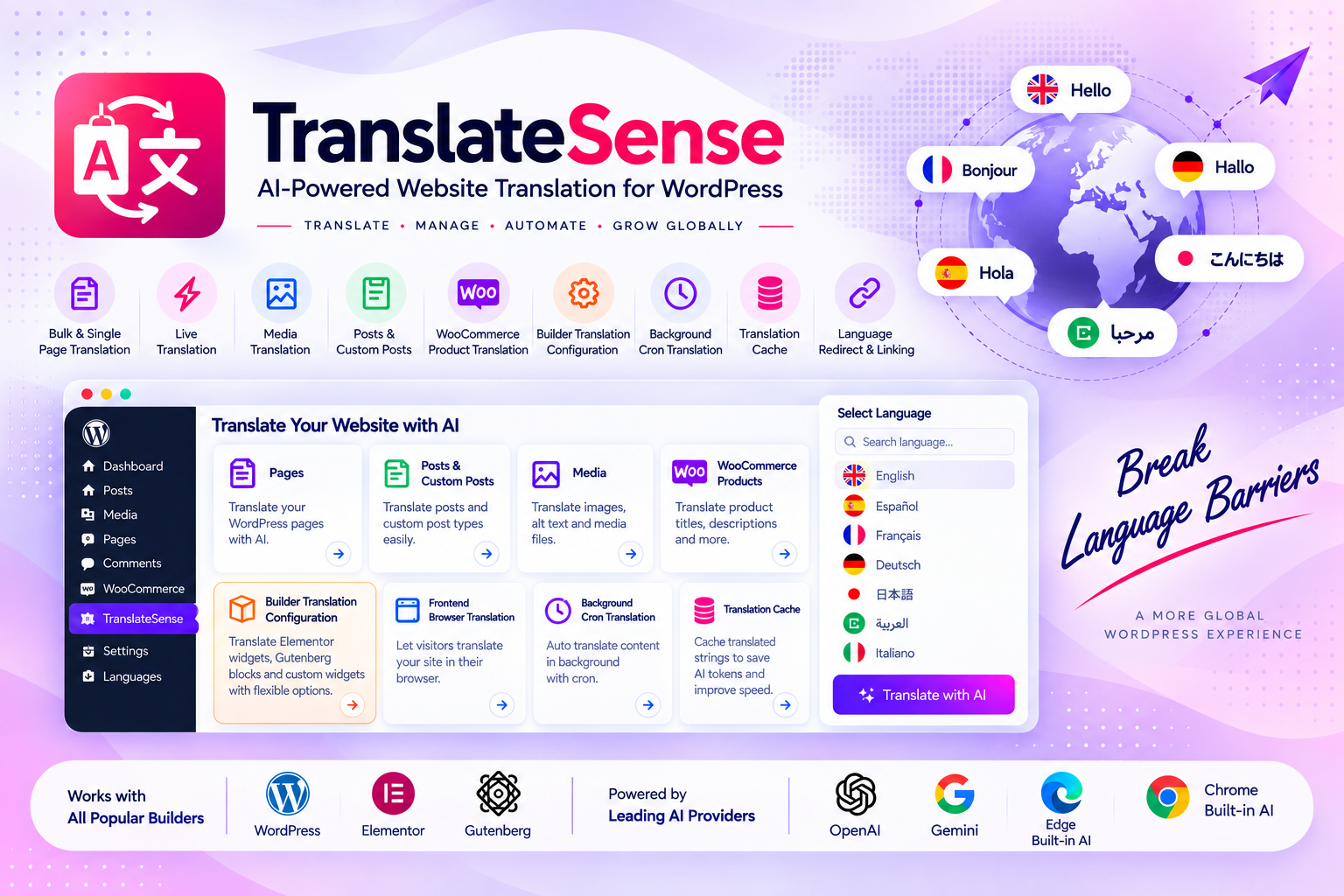
Table of Contents
best AI translation plugin for Polylang: Features to Compare
When comparing the best AI translation plugin for Polylang, first list the page types and visitor actions you need to support. Check whether the solution works with your current editor, whether content can be updated without rebuilding every card or translation, and whether the controls are understandable to the people who maintain the site.
Do not judge a plugin only from its demo. Build a small test page with realistic content, longer headings, links, images, and mobile breakpoints. Confirm that the best AI translation plugin for Polylang handles keyboard navigation and touch input, preserves readable contrast, and does not make important information available only after an animation.
Also consider maintenance. Review update history, compatibility notes, support documentation, and the effect of enabling extra modules. For a commercial site, estimate the full cost including paid extensions, external API usage, hosting, and the time needed to maintain the workflow.
A practical evaluation of the best AI translation plugin for Polylang should include a failure test. Disable a connected service or remove optional content and check whether the page still works gracefully. For translation workflows, review the translated page in context; for interactive cards, check both faces and every link before publishing.
How to Test best AI translation plugin for Polylang
Use the official documentation and product reference to verify current compatibility and supported features. For this comparison, record the test result for each shortlisted option rather than assuming that similarly named features behave the same way.
How we evaluated the options
This guide is intended to help readers choose a tool for a particular use case, not to declare one product universally best. Compare the current plugin versions using the same test site and workflow. Check each vendor’s official documentation and pricing page immediately before publication because features, plan limits, and prices can change.
- Polylang compatibility: does the product extend Polylang or replace the multilingual layer?
- Editor support: Gutenberg, Elementor, Classic Editor, or other builders?
- Content mapping: can it identify the text in blocks, widgets, and supported fields?
- Providers: which AI providers and models can be configured?
- Bulk processing: can multiple posts be processed, and how are background jobs handled?
- Translation memory: are previously translated strings stored and reused?
- Review and privacy: can translations be checked before use, and what text is sent to external providers?
Plugins and tools worth comparing
1. TranslateSense
An AI automatic translation addon for Polylang. Its documentation describes Gutenberg, Elementor, and Classic Editor workflows, XML-based content mapping, supported AI providers, bulk/background processing, and database-backed translation memory. Confirm the provider and editor options in the current version.
2. Other Polylang AI translation addons
Search the current WordPress.org directory and vendor sites for addons explicitly compatible with Polylang. Verify whether each one supports the editor and content types you use; do not assume compatibility from an AI translation label.
3. Manual translation workflow with Polylang
A manual process can be suitable for smaller sites or content that requires close human review. Compare the time and consistency trade-offs with automated workflows.
4. External translation services connected to WordPress
Some sites use external translation APIs or managed translation platforms. Check whether the integration preserves Polylang relationships and how content is synchronized.
Where Dragwyb fits
The TranslateSense overview explains its Polylang relationship, supported editors, XML mapping, providers, bulk/background processing, and translation memory.
How to choose the right option
- Choose an addon that explicitly supports your existing Polylang setup.
- Test the editors and custom fields used by your site, not just a plain paragraph.
- Check bulk processing and failure recovery before translating a large site.
- Understand provider billing separately from the plugin license.
- Review translations in context, especially product, legal, and conversion content.
Final recommendation
For a site already using Polylang, prioritize an addon that matches your editor stack and content structure. TranslateSense is relevant when you need documented Gutenberg, Elementor, Classic Editor, XML mapping, bulk/background processing, and translation-memory workflows. Compare it with other verified Polylang-compatible options using the same test content.
Frequently asked questions
Should I choose the plugin with the most features?
Not necessarily. Choose the tool that covers your required workflow with the least unnecessary complexity.
Should I compare free and paid plans separately?
Yes. Record which features are available in the free version, which require an upgrade, and whether external service costs apply.
How often should this comparison be updated?
Review it at least quarterly and whenever a major product release, pricing change, or compatibility change affects the comparison.
Practical considerations for best AI translation plugin for Polylang
An AI translation addon should be assessed against the multilingual layer already installed on the site. Polylang manages languages and translated-content relationships, while an AI addon can automate the text translation step. The best AI translation plugin for Polylang should preserve those relationships instead of creating disconnected copies of pages.
Test each editor your team uses. A site built with Gutenberg may store text in block attributes, while Elementor stores content in structured widget data. Also test custom fields, reusable templates, menus, SEO metadata, and WooCommerce product data if those are part of your site.
Provider flexibility can affect both cost and quality. Compare supported AI providers, whether you can use your own API credentials, how usage is measured, and what happens when a provider is unavailable. Review whether the plugin reuses previously translated strings and how it decides that source content has changed.
Before choosing the best AI translation plugin for Polylang, run a small batch on a staging copy and inspect the rendered target-language pages. Check links, media, language switchers, parent-child relationships, and untranslated fields. A successful API response does not by itself prove that the resulting page is correct.
Translation memory and caching are also worth testing. When a source sentence appears repeatedly, check whether the tool can reuse an approved translation and whether an edited source invalidates only the affected stored result. This can reduce repeated provider requests while keeping changes traceable.
Review the workflow for failed or partial translations. A useful Polylang addon should make it clear which posts or strings succeeded, which failed, and what needs manual review. Test a small batch before translating a large site.
