

WordPress AI agent automation plugins are worth comparing when you want to choose a solution based on real workflows rather than feature lists. This guide reviews the main evaluation points, explains where different tools fit, and highlights what to test before choosing a product. The right option depends on your site, integrations, budget, data requirements, and the level of control your team needs.
How we evaluated the options
This guide is intended to help readers choose a tool for a particular use case, not to declare one product universally best. Compare the current plugin versions using the same test site and workflow. Check each vendor’s official documentation and pricing page immediately before publication because features, plan limits, and prices can change.
- WordPress triggers: which core, plugin, form, and WooCommerce events can start a workflow?
- AI agents: can a step use a connected model and tools, or is it only a fixed action?
- Model support: which providers and model connections are available?
- Conditions: can workflows branch based on values or AI output?
- Webhooks and APIs: can the workflow receive and send external data?
- Execution history: can you inspect runs, node outputs, and failures?
- Operations: where does execution happen, and who maintains the automation service?
Plugins and tools worth comparing
1. AI Agent Workflows by Dragwyb
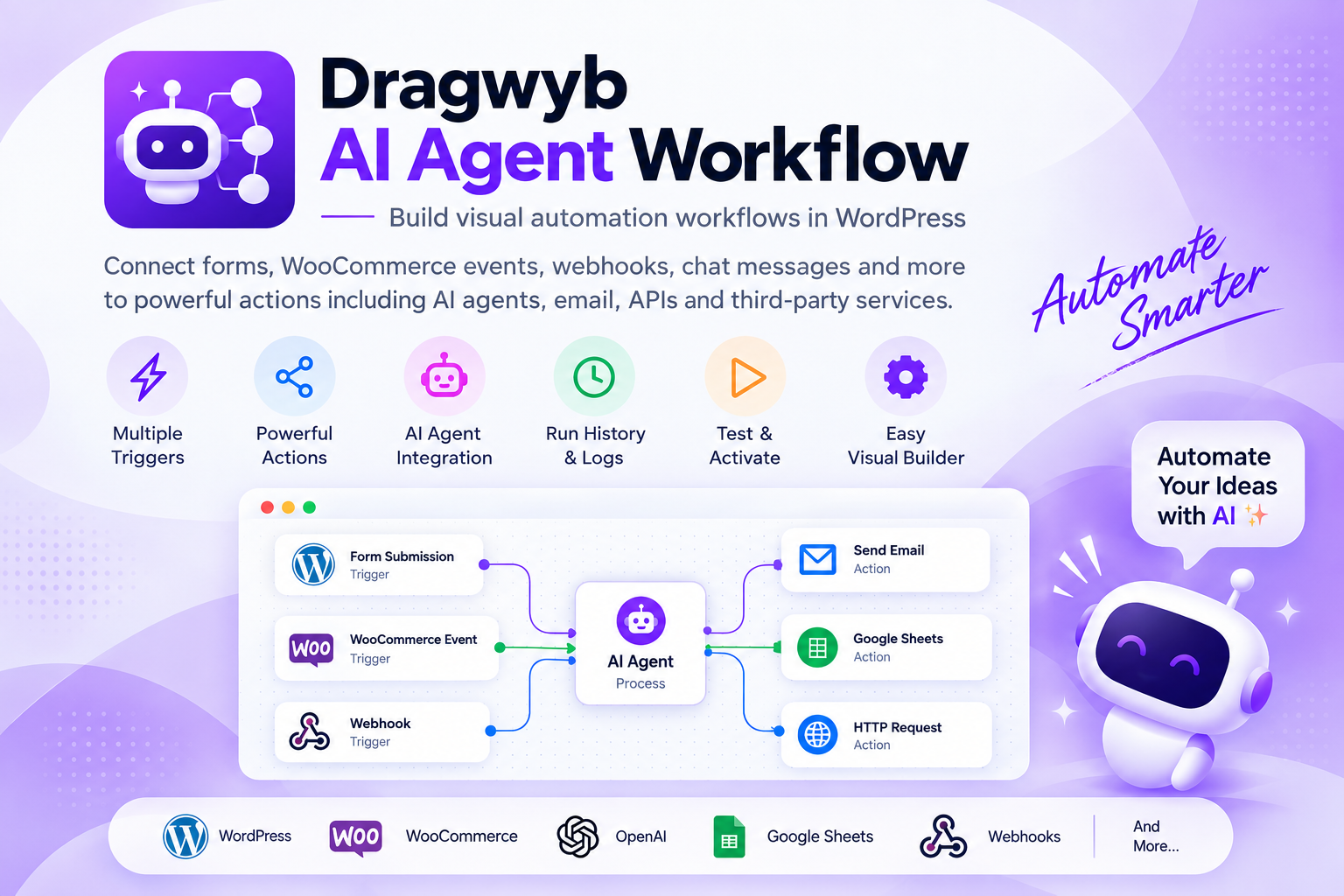
A WordPress-focused visual workflow plugin documenting AI agent nodes, multi-provider chat models, triggers, conditional routing, webhooks, connections, and workflow run history. Evaluate it when you want automation designed around WordPress events and AI steps.
2. Uncanny Automator
A WordPress automation plugin to evaluate for connecting supported WordPress plugins and services through triggers and actions. Check the current integration list and plan limits.
3. AutomatorWP
A WordPress automation option built around triggers and actions. Compare available integrations, conditional logic, and add-on requirements.
4. Bit Flows
A visual automation product to investigate for connecting WordPress events with external apps and workflow steps. Verify current AI features and integration coverage.
5. SureTriggers
A workflow automation platform with WordPress integrations. Compare its external service model, supported apps, and pricing tiers.
6. n8n
A broader workflow automation platform that can connect APIs and services. It may suit technical teams that want deeper control and are comfortable operating an external automation environment.
7. Zapier
A hosted automation service with a broad app ecosystem. Compare its breadth of integrations and task-based pricing with WordPress-native options.
Where Dragwyb fits
Start with the Dragwyb documentation portal and verify the current guides for setup, triggers, workflow nodes, providers, conditions, connections, and run history.
How to choose the right option
- Choose a WordPress-native automation plugin for workflows closely tied to WordPress events.
- Choose an external workflow platform when broad app connectivity or complex API orchestration is essential.
- Choose an AI-agent workflow tool when selected steps need model-driven classification, extraction, or decisions.
- Test retries, duplicate events, failure paths, and data permissions before activating workflows.
- Compare the total cost of plugin plans, external hosting, and AI provider usage.
WordPress AI agent automation plugins: Features and Checks That Matter
When comparing WordPress AI agent automation plugins, start by writing down the exact task you want to solve. A basic requirement may need only a lightweight plugin, while a larger workflow can require integrations, team permissions, reporting, and dependable support.
Test WordPress AI agent automation plugins with the same realistic scenario on each shortlisted product. Record setup time, the number of steps required, whether the result is reliable, and what happens when information is missing or a connected service is unavailable.
Table of Contents
Review the total cost of WordPress AI agent automation plugins, not just the advertised starting price. Check paid extensions, usage limits, external API charges, hosting requirements, agent seats, and the effort needed to maintain integrations over time.
Security and privacy should be part of your evaluation of WordPress AI agent automation plugins. Check what data is sent to third-party services, how access is restricted, whether logs contain personal information, and how administrators can revoke integrations or user permissions.
Before selecting one of these WordPress AI agent automation plugins, verify current compatibility, documentation, update history, and support options. Features and plan limits can change, so confirm important claims on the vendor’s official site before relying on them.
Final recommendation
AI Agent Workflows is most relevant when the automation begins in WordPress and needs visual steps, AI model connections, conditions, or webhooks. Compare it with established WordPress automation plugins and external platforms using the same real workflow before choosing.
Frequently asked questions
Should I choose the plugin with the most features?
Not necessarily. Choose the tool that covers your required workflow with the least unnecessary complexity.
Should I compare free and paid plans separately?
Yes. Record which features are available in the free version, which require an upgrade, and whether external service costs apply.
For additional guidance, consult the official reference and documentation when checking compatibility, setup requirements, and current capabilities.
How often should this comparison be updated?
Review it at least quarterly and whenever a major product release, pricing change, or compatibility change affects the comparison.
