

Best flip card plugin WordPress site owners can choose should do more than provide an attractive animation. A useful flip-card solution should make front and back content easy to edit, work with the site’s editor, remain usable on touch screens, and avoid hiding essential information behind hover-only behavior. This guide compares dedicated widgets, broader addons, and custom approaches.
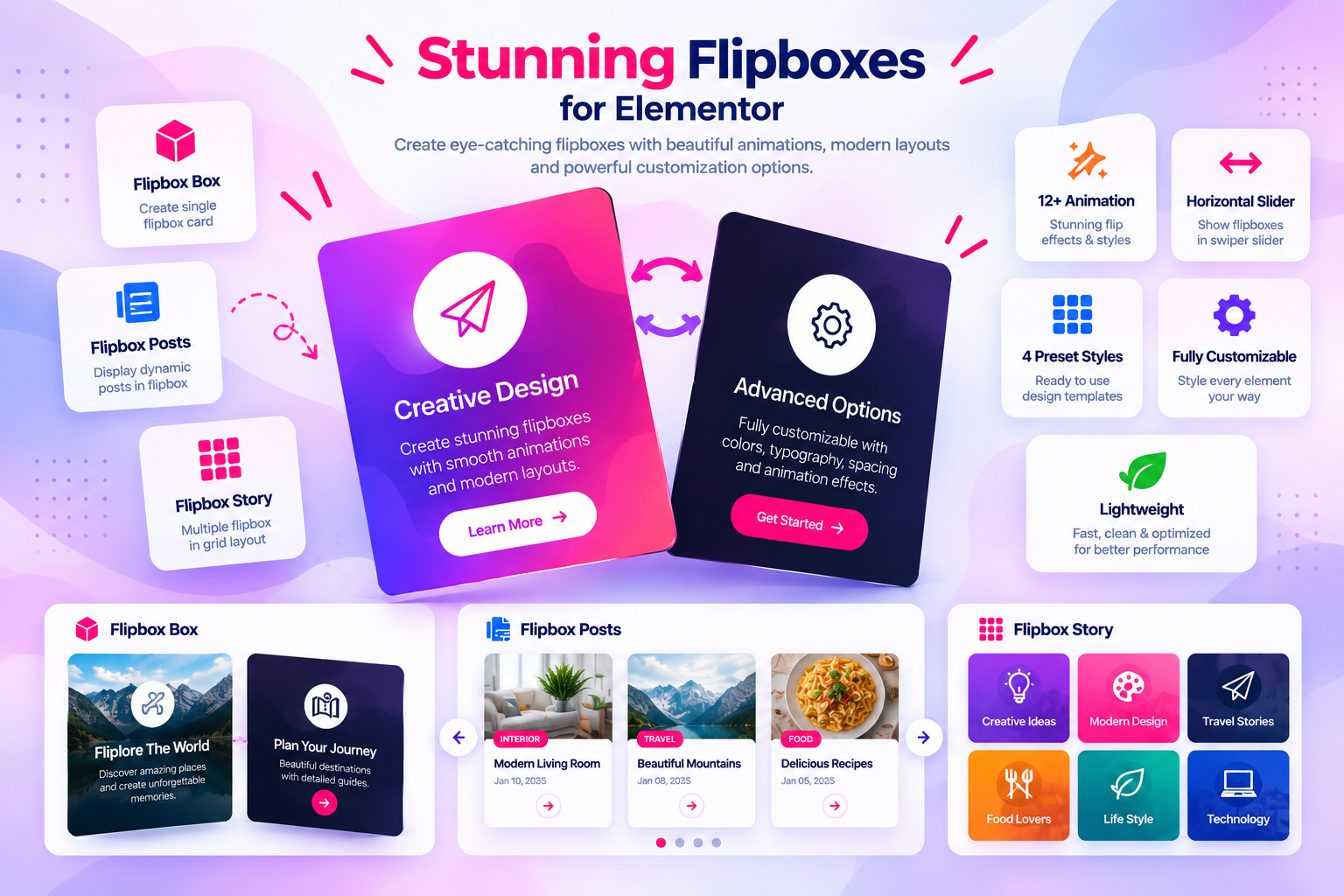
Table of Contents
best flip card plugin WordPress: Features to Compare
When comparing the best flip card plugin WordPress, first list the page types and visitor actions you need to support. Check whether the solution works with your current editor, whether content can be updated without rebuilding every card or translation, and whether the controls are understandable to the people who maintain the site.
Do not judge a plugin only from its demo. Build a small test page with realistic content, longer headings, links, images, and mobile breakpoints. Confirm that the best flip card plugin WordPress handles keyboard navigation and touch input, preserves readable contrast, and does not make important information available only after an animation.
Also consider maintenance. Review update history, compatibility notes, support documentation, and the effect of enabling extra modules. For a commercial site, estimate the full cost including paid extensions, external API usage, hosting, and the time needed to maintain the workflow.
A practical evaluation of the best flip card plugin WordPress should include a failure test. Disable a connected service or remove optional content and check whether the page still works gracefully. For translation workflows, review the translated page in context; for interactive cards, check both faces and every link before publishing.
How to Test best flip card plugin WordPress
Use the official documentation and product reference to verify current compatibility and supported features. For this comparison, record the test result for each shortlisted option rather than assuming that similarly named features behave the same way.
How we evaluated the options
This guide is intended to help readers choose a tool for a particular use case, not to declare one product universally best. Compare the current plugin versions using the same test site and workflow. Check each vendor’s official documentation and pricing page immediately before publication because features, plan limits, and prices can change.
- Does the tool work with the editor you already use?
- Can the front and back be edited independently?
- Can you control icons, images, typography, and buttons?
- Does it support multiple cards or dynamic WordPress content?
- Can users access the information on touch screens and with a keyboard?
- Does the widget add unnecessary assets to pages that do not use it?
Plugins and tools worth comparing
1. Flipbox Addon for Elementor by Dragwyb
An Elementor addon with Ultimate Flipbox, Post Flipbox, and Story Flipbox widgets. It is worth comparing when you want a dedicated set of flipbox controls rather than a general-purpose card block.
2. Essential Addons for Elementor
A broader Elementor addon collection. Check whether its current flipbox or interactive-card widget meets the design and plan requirements.
3. Premium Addons for Elementor
A general widget collection to investigate for hover and card effects. Verify the exact feature and whether it is included in the free or paid package.
4. The Plus Addons for Elementor
A larger Elementor addon suite to compare if you need flip-card effects alongside other page-building widgets.
5. Custom CSS and JavaScript
A custom implementation can provide precise behavior, but it requires development, maintenance, responsive testing, and accessibility work.
Where Dragwyb fits
See the Flipbox Addon setup guide and Story Flipbox collection guide for widget selection and configuration.
How to choose the right option
- Use an Elementor addon when the site is already built with Elementor.
- Use a broader widget suite if you will use several of its widgets.
- Use a custom implementation when the design is highly specific and a developer can maintain it.
- Do not hide essential information exclusively behind a hover interaction.
- Test the card on touch devices and with keyboard navigation.
Final recommendation
For Elementor sites, start by comparing the actual flipbox widgets available in the installed addon versions. Flipbox Addon for Elementor offers three documented widget types, which makes it a relevant candidate when flip cards are a recurring design requirement.
Frequently asked questions
Should I choose the plugin with the most features?
Not necessarily. Choose the tool that covers your required workflow with the least unnecessary complexity.
Should I compare free and paid plans separately?
Yes. Record which features are available in the free version, which require an upgrade, and whether external service costs apply.
How often should this comparison be updated?
Review it at least quarterly and whenever a major product release, pricing change, or compatibility change affects the comparison.
Practical considerations for best flip card plugin WordPress
A flip-card design should communicate its message even when the visitor never triggers the animation. Keep the front face concise, make the reverse face useful, and avoid placing pricing, eligibility, or other essential details exclusively on the hidden side. The best flip card plugin WordPress sites use should support readable content on both faces.
Check whether the plugin provides a clear way to add a title, description, icon, image, and action link. If you need a group of cards, find out whether each card can be edited independently and whether the layout supports equal heights, consistent spacing, and responsive columns.
On mobile, hover does not work in the same way as a desktop pointer. Test tap behavior, keyboard focus, reduced-motion preferences, and whether a visitor can return to the front face. These details help distinguish a polished flip-card experience from an effect that only looks good in a desktop demo.
Before choosing the best flip card plugin WordPress project teams should compare, test it with real copy rather than placeholder text. Long headings, translated strings, and different image ratios often reveal layout problems that are not visible in a short demo.
Also check whether the card can be built with the page builder already active on the site. A standalone block may be useful for Gutenberg pages, while an Elementor widget may offer more design controls inside existing layouts. Avoid installing overlapping addons when one compatible tool already covers the required card behavior.
Consider how content editors will maintain the cards after launch. Clear labels, reusable styles, predictable responsive controls, and a simple way to update links reduce mistakes when several people manage the website.
