

WPForms alternatives are worth comparing when you want to choose a solution based on real workflows rather than feature lists. This guide reviews the main evaluation points, explains where different tools fit, and highlights what to test before choosing a product. The right option depends on your site, integrations, budget, data requirements, and the level of control your team needs.
How we evaluated the options
This guide is intended to help readers choose a tool for a particular use case, not to declare one product universally best. Compare the current plugin versions using the same test site and workflow. Check each vendor’s official documentation and pricing page immediately before publication because features, plan limits, and prices can change.
- Migration: can existing forms be rebuilt without losing important field behavior?
- Editor: does the team prefer a visual drag-and-drop interface or a simpler configuration model?
- Advanced logic: are conditional fields and multi-step flows included?
- Entries: are submissions stored and exportable?
- Integrations: does it connect to the email, CRM, payment, or automation services you use?
- Email reliability: can you configure SMTP and test notifications?
- Total cost: include licenses, extensions, and external services.
Plugins and tools worth comparing
1. Smart Form Builder by Dragwyb
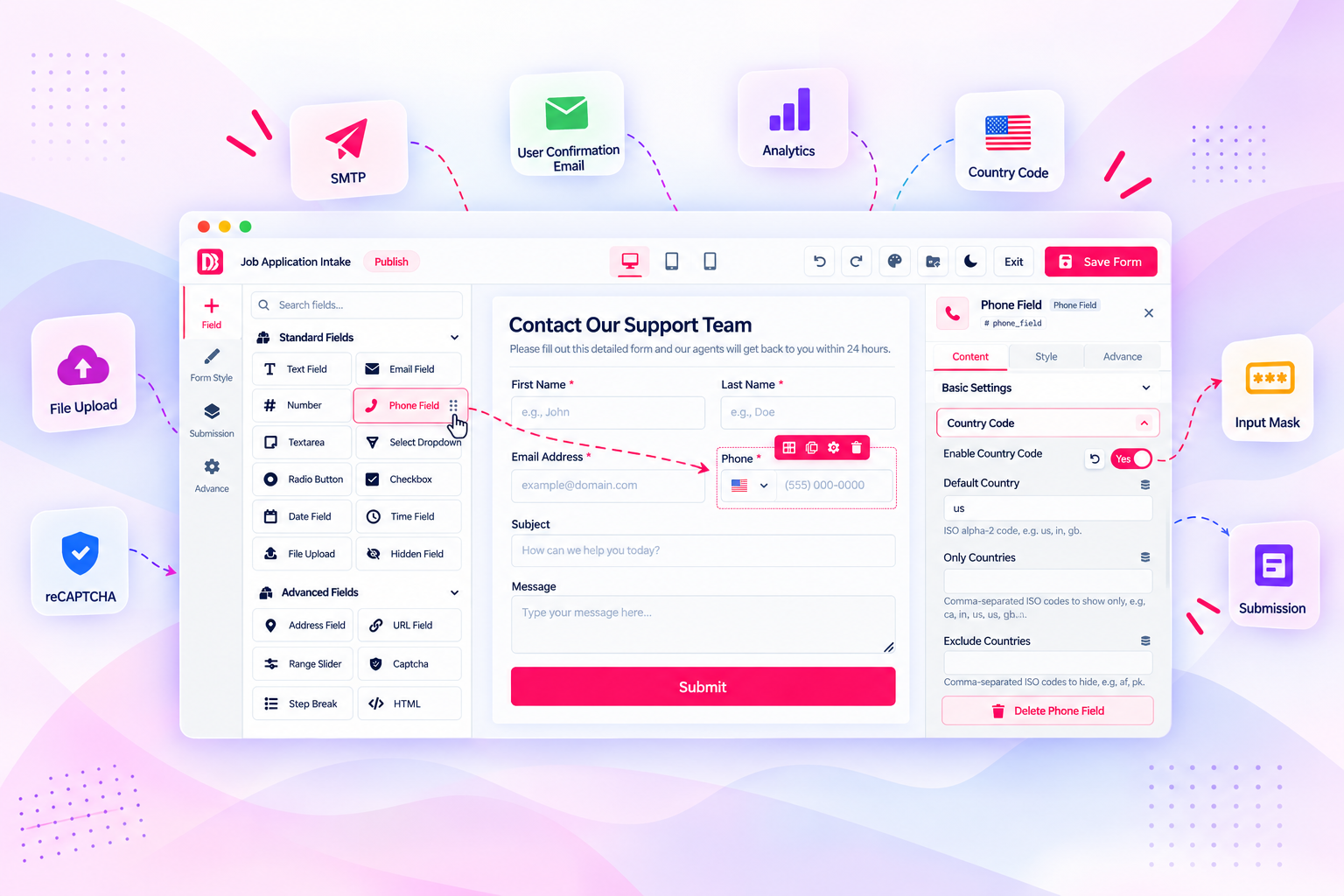
A visual form builder to evaluate for contact forms, lead generation, surveys, multi-step forms, conditional logic, templates, analytics, SMTP, spam protection, and entry management. Verify the current plan availability for each feature.
2. Fluent Forms
A visual WordPress form builder to compare for its editor, integrations, and advanced form features. Check current pricing and plan boundaries.
3. Formidable Forms
A form solution to evaluate when forms need more structured data workflows and advanced functionality. Compare the complexity and cost of the features you need.
4. Gravity Forms
A mature form builder with an extension ecosystem. Compare its licensing, integrations, and developer-oriented options.
5. Forminator
A form and interactive-content plugin to consider for forms, polls, and quizzes. Verify the current capabilities against your required workflow.
6. Contact Form 7
A lightweight option for users who prefer a simple form-tag workflow and are comfortable adding extensions or custom code for advanced requirements.
Where Dragwyb fits
See the Smart Form Builder getting-started documentation for the editor workflow and setup steps. Use the current plugin settings and pricing information to verify which advanced capabilities are available in each plan.
How to choose the right option
- Choose a simple plugin for basic contact forms and minimal maintenance.
- Choose a visual builder if editors need to create and change forms without coding.
- Choose an advanced data-focused form solution if submissions drive complex business processes.
- Test the migration of one representative form before replacing every form on a live site.
- Compare plan costs for the exact integrations and features you will use.
WPForms alternatives: Features and Checks That Matter
When comparing WPForms alternatives, start by writing down the exact task you want to solve. A basic requirement may need only a lightweight plugin, while a larger workflow can require integrations, team permissions, reporting, and dependable support.
Test WPForms alternatives with the same realistic scenario on each shortlisted product. Record setup time, the number of steps required, whether the result is reliable, and what happens when information is missing or a connected service is unavailable.
Table of Contents
Review the total cost of WPForms alternatives, not just the advertised starting price. Check paid extensions, usage limits, external API charges, hosting requirements, agent seats, and the effort needed to maintain integrations over time.
Security and privacy should be part of your evaluation of WPForms alternatives. Check what data is sent to third-party services, how access is restricted, whether logs contain personal information, and how administrators can revoke integrations or user permissions.
Before selecting one of these WPForms alternatives, verify current compatibility, documentation, update history, and support options. Features and plan limits can change, so confirm important claims on the vendor’s official site before relying on them.
Final recommendation
The right WPForms alternative depends on why you are switching. If you want a visual builder and WordPress-native form workflows, evaluate Smart Form Builder alongside Fluent Forms, Formidable Forms, Gravity Forms, and other options. Rebuild and test one real form before migrating your site.
Frequently asked questions
Should I choose the plugin with the most features?
Not necessarily. Choose the tool that covers your required workflow with the least unnecessary complexity.
Should I compare free and paid plans separately?
Yes. Record which features are available in the free version, which require an upgrade, and whether external service costs apply.
For additional guidance, consult the official reference and documentation when checking compatibility, setup requirements, and current capabilities.
How often should this comparison be updated?
Review it at least quarterly and whenever a major product release, pricing change, or compatibility change affects the comparison.
